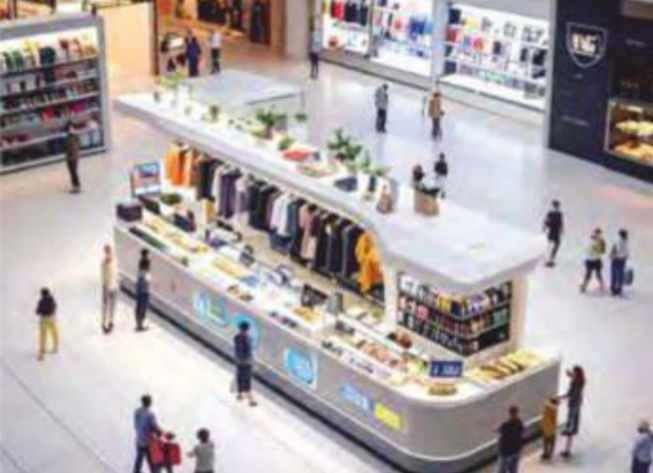
India’s fast-growing retail sector is driving demand for advanced fixture solutions that blend design, durability, and sustainability.
India’s retail landscape is undergoing a significant transformation, driven by rapid expansion and formalisation. This evolution has created a vibrant and sophisticated market for retail fixtures, including shelving, gondolas, counters, racking, and branded shop-in-shop systems. The market is experiencing a strong demand signal for store build-outs and refresh cycles, which is underpinned by a robust supply chain for retail fixtures.
Market Growth and Expansion
The organised retail stock in India’s top cities is accelerating at a remarkable pace. In early 2025, the new supply of retail space already outpaced the total for the whole of 2024. This has brought the cumulative Grade-A stock to approximately 88.5 million sq ft. This expansion is not limited to metros; retail is also pushing into Tier-Il and Tier-III locations as brands seek growth and landlords refine their tenant mixes. This trend is expected to continue in 2025, supported by a healthy pipeline of mall developments and a sharper focus on experience-led formats that blend shopping, dining, and entertainment. This shift is leading to a demand for more complex fixture packages that include integrated lighting, media, and modular components to support frequent visual merchandising changes, moving beyond simple steel-and-board units.
The macro retail indicators further reinforce this opportunity. India’s retail market was estimated at US$952billion in 2024, with growth largely driven by consumption outside the major metropolitan areas. E-retail alone reached about US$60 billion in 2024. The rise of omni channel behaviours, such as click-and-collect and ship-from-store, is blurring the lines between the warehouse and the shop floor. This requires fixtures to be engineered for higher loads, efficient cable and device management for tablets and scanners, and quick service access for store associates.
Market Growth and Expansion
The organised retail stock in India’s top cities is accelerating at a remarkable pace. In early 2025, the new supply of retail space already outpaced the total for the whole of 2024. This has brought the cumulative Grade-A stock to approximately 88.5 million sq ft. This expansion is not limited to metros; retail is also pushing into Tier-ll and Tier-III locations as brands seek growth and landlords refine their tenant mixes. This trend is expected to continue in 2025, supported by a healthy pipeline of mall developments and a sharper focus on experience-led formats that blend shopping, dining, and entertainment. This shift is leading to a demand for more complex fixture packages that include integrated lighting, media, and modular components to support frequent visual merchandising changes, moving beyond simple steel-and-board units.
The macro retail indicators further reinforce this opportunity. India’s retail market was estimated at US$952billion in 2024, with growth largely driven by consumption outside the major metropolitan areas.
E-retail alone reached about US$60 billion in 2024. The rise of omnichannel behaviours, such as click-and-collect and ship-from-store, is blurring the lines between the warehouse and the shop floor. This requires fixtures to be engineered for higher loads, efficient cable and device management for tablets and scanners, and quick service access for store associates.
Manufacturing and Material Professionalisation
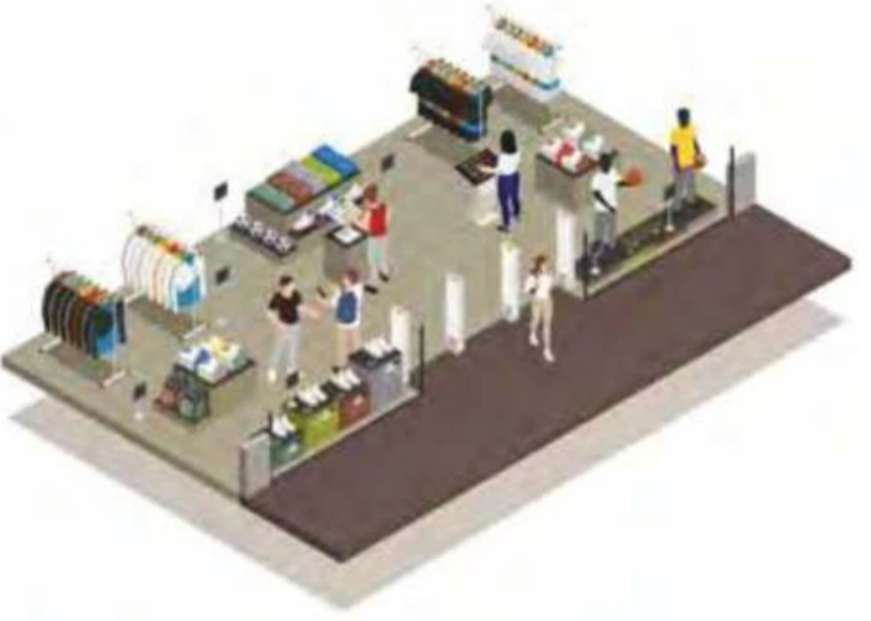
India’s fixture manufacturers have moved beyond conventional fabrication and are now employing advanced technologies. The best plants utilise CNC panel processing, laser/tube cutting, automated press brakes, robotic welding, and advanced powder-coating lines. These facilities also use digital work flows, including parametric CAD libraries and CAM nesting, to shorten engineering lead times for roll-outs across multiple sites. The adoption of Design for Manufacture and Assembly (DfMA) is also spreading, with knockdown kits that reduce logistics costs and damage, and standardised fasteners that speed up installation.
The materials used are also becoming more professionalised. While mild steel and commercial plywood once dominated, many projects now blend CRCA/MS and stainless steel, aluminium extrusions, engineered wood with high-pressure laminates, and acrylics or glass for premium touch points. Brands are increasingly demanding provenance and performance documentation, such as CARB/FSC-type claims for boards and coating certificates, driven by corporate sustainability goals. India’s certification ecosystem is maturing, with the CII GreenPro ecolabel now covering a wide range of building-adjacent products. This indicates that fixture programs can source lower-impact substrates locally.
Sustainability and Circularity
The focus on sustainability is tightening. Retailers are requesting low-VOC finishes, powder over wet paint where feasible, and closed-loop waste management for metal and wood. Demands for circularity are also emerging, pushing for fixtures to be designed for repair, refurbishment, and reuse. This includes specifying monomaterials or separable parts for easier end-of-life recycling. These practices, while standard in mature markets, are becoming baseline expectations in India as procurement teams adopt global scorecards. For manufacturers, embracing sustainability is not just ethical; it also protects margins by reducing scrap and rework, and it helps win competitive bids.
Challenges and Headwinds
Despite the robust growth, the sector faces several headwinds. Raw-material volatility, particularly for steel and board pricing, can erode thin margins on fixed-price roll-outs, necessitating indexed contracts or hedging mechanisms. Compressed timelines driven by rent-start dates put pressure on prototyping and value engineering, increasing the risk of rework. Skilled labour remains a constraint, especially for finishing, assembly, and onsite installation. Furthermore, the after-sales support is underdeveloped, with brands increasingly expecting service level agreements (SLAs) for repairs and spare parts. This is pushing fixture suppliers to establish regional service hubs.
Keys to Success
To separate leaders from laggards, manufacturers must focus on several key areas:
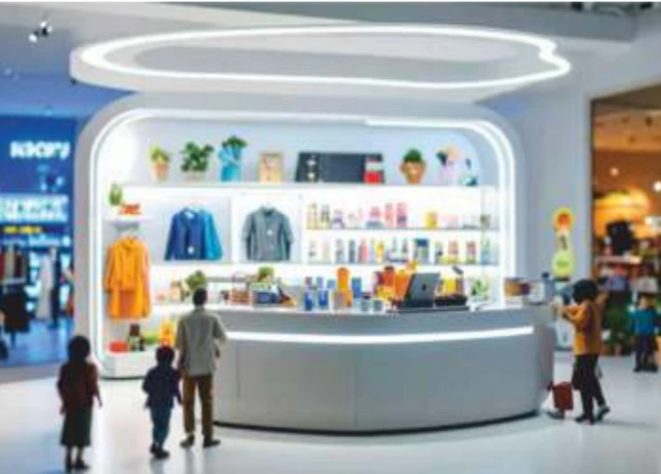
- Modularity and platform thinking: Building a core library of bays, end-caps, and fitting-room modules with swappable skins and accessories allows for faster roll-outs and seasonal changes without scrapping the core structures.
- Factory automation with quality gates: Investing in robotic weld cells for high-runner SKUs and inline dimensional scanning helps catch issues before coating, reducing downstream surprises.
- ESG by design: Committing to low-VOC powders, recycled content targets, and board certification, and publishing Environmental Product Declarations (EPDs), satisfies large retailers’ procurement checklists.
- Omnichannel-ready fixtures: Engineering back-of-house shelving, click-and-collect counters, and micro-fulfilment workstations that integrate scanners and scales is crucial as stores become nodes in the delivery network.
Programmatic delivery: Using cloud-based PLM, QR-coded parts, and digital install guides builds trust with landlords and brands and shortens cash cycles.
The medium-term outlook for India’s retail fixture market is constructive. Analysts estimate India needs an additional 55 million sq ft of Grade-A mall space by 2027 to align with peers on retail space per capita.
This, combined with steady store openings and the normalisation of omnichannel retail, suggests a robust order book for manufacturers with capacity, certification, and program discipline. Those who also offer comprehensive design-to-installation services and a commitment to measurable sustainability will be best placed to partner with national retailers as they differentiate their in-store experiences.